 +43 1 226 5567
New at Medino from 1 October 2026 · nuclear medicine & thyroid
The thyroid in Vienna: the small organ that has a say everywhere
Dr. med. univ. Bamdad Heydari – specialist in nuclear medicine
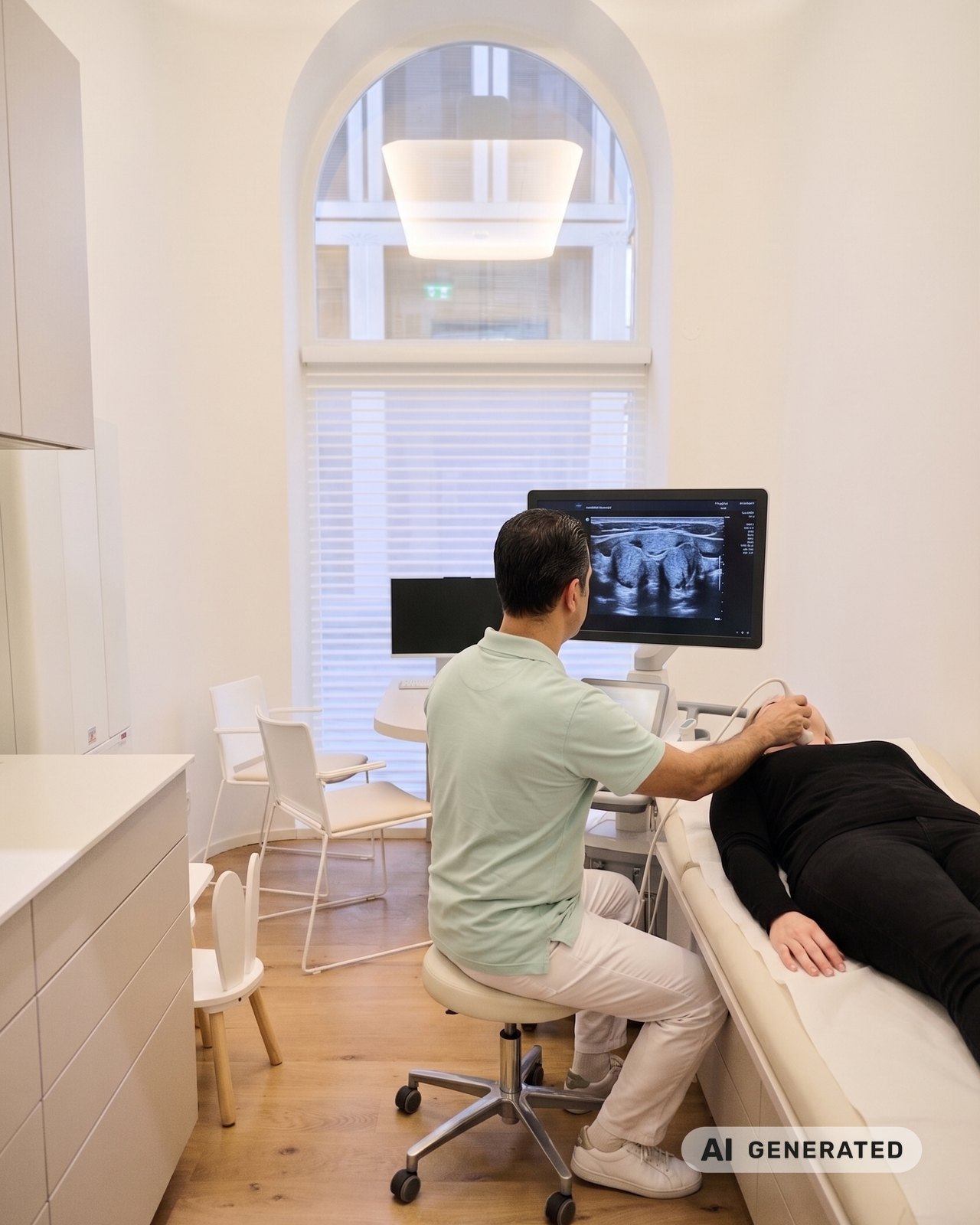
Tiredness, palpitations, hair loss, changes in weight, an unfulfilled wish for a child: very different complaints, one possible common denominator. Conversation, ultrasound and laboratory in a single appointment – with findings you understand.
Dr. Heydari will hold consultations at the Medino Medical Centre from 1 October 2026. Appointments are already being allocated: Send your appointment request online – we will fix your preferred time and confirm it to you.
Already a patient? Then you do not need a form. You can reach Dr. Heydari's assistant directly on +43 1 226 5567-116 or schilddruese@medino.at.
How the thyroid controls the body
An organ that has a say everywhere – which is why it is so often overlooked
Thyroid hormones act on almost every organ system. That is precisely why those affected often end up first with the cardiologist, the gastroenterologist or the dermatologist – and nobody looks at the neck. Dr. Heydari takes the opposite route: first the control centre, then the symptoms.
"Women in particular often suffer from a thyroid dysfunction. One woman in five is affected." Dr. med. univ. Bamdad Heydari, specialist in nuclear medicine
Stomach & intestines
Thyroid hormones increase intestinal motility and the metabolism of sugar, fat and connective tissue.
Brain & mind
The hormones act on the nervous system and help determine energy consumption and basal metabolic rate.
Heart & circulation
Thyroid hormones influence heart rate, blood pressure and the width of the blood vessels.
Muscles
They control protein consumption, energy production and the speed at which the muscles tense and relax.
Skin, hair & nails
The hormones increase the activity of sweat and sebaceous glands and promote the growth of skin, hair and nails.
Bones
A healthy thyroid influences the bone-building cells and thus the preservation of bone substance.
Professional basis: patient information "Control of the essential functions of the human body by the thyroid" by Dr. med. univ. Bamdad Heydari.
Send an appointment requestAlready a patient? Then you do not need a form – you can reach Dr. Heydari's assistant directly on +43 1 226 5567-116 or schilddruese@medino.at.
The thyroid check
Tired, cold, put on weight? That is not a question of character.
One appointment. Ultrasound, laboratory – and findings you understand.
Thyroid complaints are often attributed for years to stress, age or lack of sleep. Yet the thyroid can be assessed quickly and painlessly: a detailed conversation, an ultrasound and the right laboratory values are enough in the vast majority of cases to create clarity.
How your thyroid check works
Conversation
Your complaints, your history, family predisposition and current medication – without time pressure.
Ultrasound
Size, structure, blood flow and nodules of the thyroid – painless, without radiation, in a few minutes.
Laboratory & findings
TSH, free thyroid hormones and – where sensible – antibodies. Then the explanation in words you understand.
Good to know
- A single TSH value is a snapshot – only together with ultrasound and history does it give a picture.
- The ultrasound of the thyroid is completely painless and works without X-rays.
- "Borderline" values also need to be put in context – especially where there is a wish for a child, a pregnancy or heart complaints.
- Bring old findings with you: the course over time often says more than a single value.
No referral, no waiting for months: as a Wahlarzt practice you send your appointment request directly online – around the clock, in two minutes.
Send an appointment requestAlready a patient? Then you do not need a form – you can reach Dr. Heydari's assistant directly on +43 1 226 5567-116 or schilddruese@medino.at.
Underactive thyroid · Hashimoto's thyroiditis
When the body runs on low flame
With an underactive thyroid the gland produces too few hormones – the entire metabolism slows down. The complaints come on gradually and are therefore often overlooked or dismissed as "just stress".
The most common complaints
- Tiredness
- Poor concentration
- Coarse, dull hair
- Constipation
- Feeling cold easily
- Hair loss
- Dry, cool, doughy skin
- Hoarseness
- Cycle disorders in women
- Weight gain
- Low spirits
- Muscle weakness & tension
Not every kind of tiredness is the thyroid – but it should be ruled out before you treat the wrong thing for years.
Send an appointment requestAlready a patient? Then you do not need a form – you can reach Dr. Heydari's assistant directly on +43 1 226 5567-116 or schilddruese@medino.at.


Overactive thyroid · Graves' disease
When the engine keeps revving
With an overactive thyroid the gland produces too many hormones. The body runs continuously: palpitations, inner restlessness, sweating, weight loss despite a good appetite. Many of those affected end up with the cardiologist first – yet the cause sits in the neck.
The most common complaints
- Restlessness
- Increased sweating
- Hair loss
- Weight loss despite appetite
- Trembling hands
- Diarrhoea
- Fast, irregular pulse
- Cycle disorders in women
- Sleeplessness
- Irritability
Palpitations and weight loss should be assessed promptly – an untreated overactive thyroid puts strain on the heart and bones.
Send an appointment requestAlready a patient? Then you do not need a form – you can reach Dr. Heydari's assistant directly on +43 1 226 5567-116 or schilddruese@medino.at.
Thyroid & fertility
An unfulfilled wish for a child? The thyroid belongs on the list.
The small organ below the larynx has a great influence on a woman's fertility. With an under- or overactive thyroid there are interactions between thyroid and sex hormones. These disturbances can affect the monthly cycle – and be a reason for involuntary childlessness.
- TSH, free hormones and antibodies – the relevant values in a single laboratory appointment
- Ultrasound of the thyroid to assess structure and nodules
- Adjustment and monitoring before and during fertility treatment
- Close coordination with fertility medicine and gynaecology in the building
Short distances at Medino: fertility medicine, gynaecology and the laboratory are at one address – one set of findings, one plan.
Send an appointment requestAlready a patient? Then you do not need a form – you can reach Dr. Heydari's assistant directly on +43 1 226 5567-116 or schilddruese@medino.at.

Thyroid & pregnancy
In pregnancy the TSH value counts double
The need for hormones rises automatically in pregnancy – expectant mothers need more iodine. That is why particular attention to a proper diet is needed during this time, in order to cover the increased need for iodine.
Why this matters so much: Even a latent underactive thyroid can impair the development of the unborn child. In addition, where a thyroid disease goes untreated, the risk of miscarriage, stillbirth and premature birth is increased. Dr. Heydari monitors the values closely and adapts the treatment to the changed need – during pregnancy and breastfeeding.
Send an appointment requestAlready a patient? Then you do not need a form – you can reach Dr. Heydari's assistant directly on +43 1 226 5567-116 or schilddruese@medino.at.
Nodules · goitre · thyroiditis
A lump in the neck is common – and usually harmless. But it should be looked at.
Austria was an iodine-deficient region for a long time, and nodules and enlarged thyroids (goitre) are correspondingly common. The vast majority are benign. What matters is assessing this properly on ultrasound – and not overlooking the few conspicuous findings. Where more than ultrasound and laboratory is needed, Dr. Heydari as a nuclear medicine specialist with clinical experience knows the short route there.
Assessing nodules
Size, structure and blood flow on high-resolution ultrasound – including a classification of the risk.
Goitre
Assessment of an enlarged thyroid, search for the cause and advice on the further strategy.
Thyroid inflammation
Recognising thyroiditis, distinguishing it from an acute infection and accompanying its course.
Scintigraphy & further diagnostics
Where a scintigraphy is needed, Dr. Heydari organises the hospital appointment directly – usually within 48 hours – and then discusses the findings with you personally.
Laboratory in the building
TSH, fT3, fT4 and antibodies – short distances instead of an odyssey of appointments across several addresses.
Follow-up monitoring
Regular checks of nodules and values – so that changes are noticed early.
Already a patient? Then you do not need a form – you can reach Dr. Heydari's assistant directly on +43 1 226 5567-116 or schilddruese@medino.at.
New · weight & metabolism
Losing weight with medical support – not on your own
Weight and the thyroid are closely connected: an underactive thyroid slows the metabolism, an overactive one drives it. That is why every serious weight reduction begins with an assessment of the control centre. Dr. Heydari then accompanies patients medically – in a structured way, closely monitored and focused on what most programmes overlook.
- Medical assessment of thyroid, blood sugar, liver and fat metabolism beforehand
- An individual treatment plan with close support instead of a prescription and goodbye
- Preserving muscle at the centre: targeted protein intake and strength training – otherwise the yo-yo effect looms
- Regular laboratory checks along the way – thyroid, blood sugar, liver and lipid values
- Fixed follow-up appointments instead of self-experiment: course, tolerability, adjustment
Whether medication support is an option for you is decided solely in a personal medical consultation. A separate information page on this will follow shortly.
Send an appointment requestAlready a patient? Then you do not need a form – you can reach Dr. Heydari's assistant directly on +43 1 226 5567-116 or schilddruese@medino.at.
Second opinion · follow-up monitoring
You have been taking tablets for years – and still do not feel well?
Thyroid treatment is not a one-off adjustment. Stage of life, weight, pregnancy, other medication: many things change the requirement. If complaints persist even though the values "fit", a second, unbiased look is worthwhile.
- Going through existing findings and laboratory values together – in language you understand
- Reviewing the current dosage and how it is taken
- Clarifying whether ultrasound, antibodies or further diagnostics make sense
- A realistic assessment: what can the thyroid explain – and what rather not?
Please bring all previous findings with you. The course over the years is often more valuable for the assessment than a single current value.
Send an appointment requestAlready a patient? Then you do not need a form – you can reach Dr. Heydari's assistant directly on +43 1 226 5567-116 or schilddruese@medino.at.
Your thyroid specialist
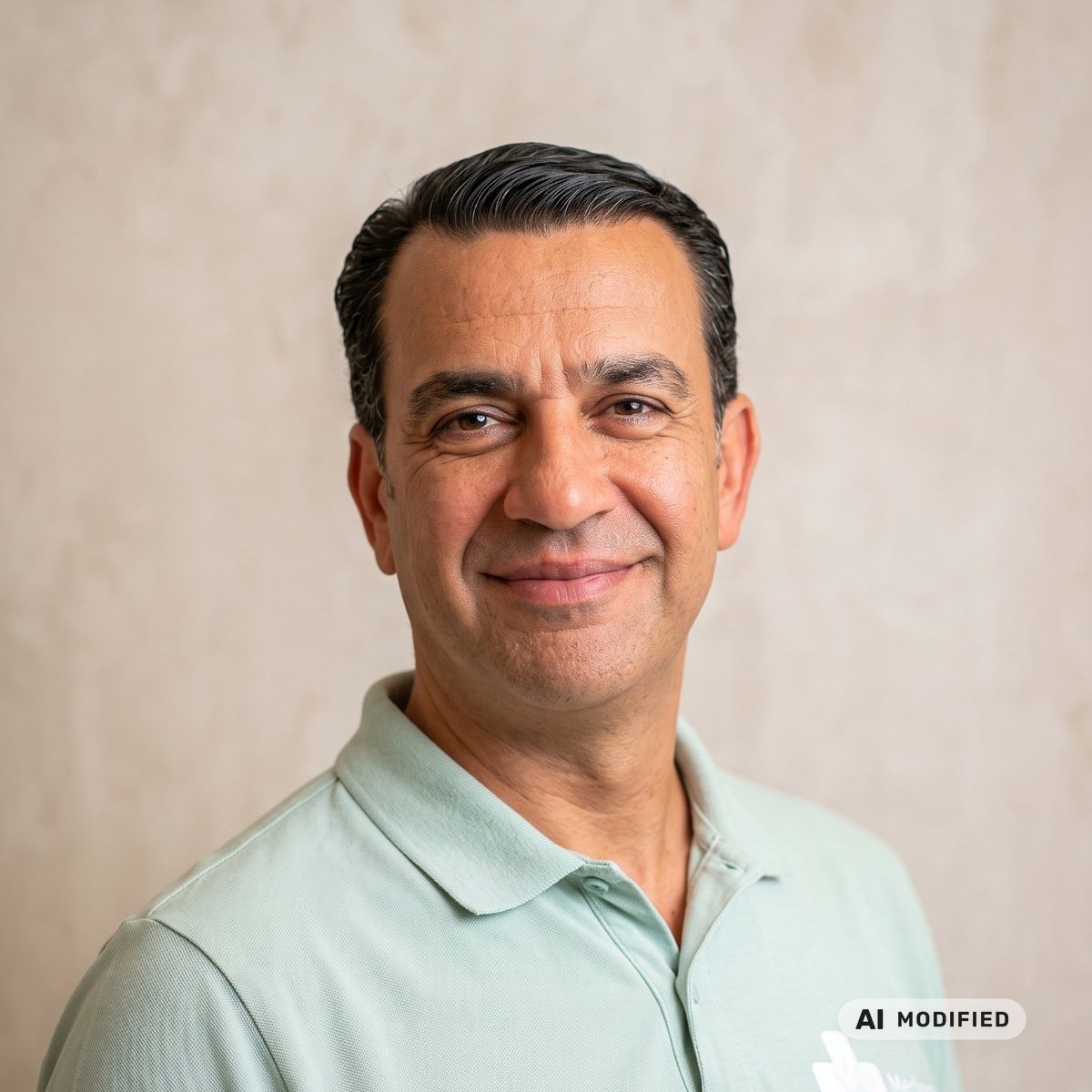
Dr. med. univ. Bamdad Heydari – nuclear medicine means understanding function
Nuclear medicine is the field that asks not only how an organ looks, but how it works. With the thyroid that is precisely the decisive question. Dr. Heydari combines this specialist perspective with a style for which his patients have repeatedly given him awards.
- Special interests: thyroid disorders as well as thyroid and pregnancy
- Professional qualifications: nuclear medicine as well as general and family medicine (ÖÄK)
- ÖÄK diplomas: DFP further education diploma and emergency doctor diploma
- Many years of clinical experience, including at Klinik Ottakring
- Repeatedly awarded the DocFinder Patients’ Choice Award
- Additional focus: medically supervised weight reduction
How it works
From the first click to clarity
Send an appointment request
In real time through the Medino scheduler – without a referral, without a telephone queue.
Conversation & ultrasound
Your complaints in detail, then the painless ultrasound of the thyroid.
Laboratory & classification
TSH, free hormones and – where sensible – antibodies. Then the explanation without jargon.
Treatment & monitoring
Medication adjustment if needed – with a clear monitoring plan instead of flying blind.
Why Medino?
A medical centre for the whole family – in the heart of the 1st district, with medicine that takes its time.
Time for your questions
Detailed conversations instead of a five-minute rhythm – especially for complaints nobody took seriously for a long time.
Short distances in the building
Laboratory, internal medicine, gynaecology, fertility, paediatricians – short distances instead of doctor hopping.
Flexible as a Wahlarzt practice
Appointment requests online around the clock, short waiting times, appointments until 8 pm and on Saturdays.
The doctors and therapists at MEDINO are self-employed. The treatment contract is concluded with the treating person in each case.
Location & how to get here
In the heart of Vienna – quick to reach, even in your lunch break
Medino is centrally located in the 1st district by the city hall, Auerspergstrasse 6 – many patients combine the appointment with their journey to work.
Public transport: U2 Rathaus and tram 2 are each a three-minute walk, tram 46 Auerspergstrasse three minutes, U3 Volkstheater seven minutes.
By car: There are several car parks in the immediate vicinity:
Auerspergstrasse 6, 1010 Vienna
Open the route in Google Maps
Mon 9–18 · Tue–Fri 9–20 · Sat 10–15 · Sun closed
The consulting hours of the individual doctors may differ.
+43 1 226 5567 · servus@medino.at
Wahlarzt practice · fee note for submission to your health insurance fund
Thyroid practice of Dr. Heydari from 1 October 2026
+43 1 226 5567-116 · schilddruese@medino.at
Already a patient? Then you do not need a form – your enquiry reaches Dr. Heydari's personal assistant directly.
Two minutes for your enquiry. And finally knowing where you stand.
Whether it is a first assessment, a nodule, fertility or a second opinion – send your appointment request to Dr. Heydari. The practice starts on 1 October 2026.
Send an appointment request Prefer the phone or e-mail?+43 1 226 5567-116 · schilddruese@medino.at
Frequently asked questions
Good to know
Which complaints can point to a thyroid disorder?
Why does the thyroid cause such different complaints?
How does a thyroid examination proceed?
Does the thyroid ultrasound hurt?
What is Hashimoto's thyroiditis?
What is Graves' disease?
Can the thyroid be the reason for an unfulfilled wish for a child?
Why is the thyroid particularly important in pregnancy?
I have a nodule on my thyroid – is that dangerous?
Does the thyroid have anything to do with my weight?
My values are "normal", but I feel bad. Is an appointment worthwhile?
What should I bring to the first appointment?
From when can I get an appointment with Dr. Heydari?
I am already a patient – do I have to fill in the form?
Do you also carry out a scintigraphy?
Do I need a referral?
What does Wahlarzt mean – and do I get the costs back?
Which languages does Dr. Heydari speak?
Medically reviewed and approved by Dr. med. univ. Bamdad Heydari · 11 August 2026